By Super Blessing:-
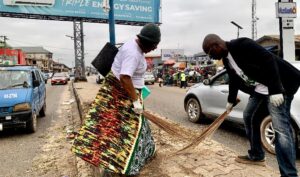
Electioneering in Nigeria is often characterised by carefully choreographed public displays of humility by politicians seeking public office. As campaigns gather momentum, political candidates across party lines are frequently seen eating at roadside food stalls, patronising local markets, riding commercial motorcycles and tricycles, attending community events without Security Guides, and engaging in everyday activities intended to portray them as ordinary citizens who understand the struggles of the people.
These gestures are usually presented as demonstrations of simplicity, accessibility, and empathy. It is no gainsaying that many supporters interpret such actions as evidence that their preferred candidates remain connected to the grassroots despite their political status. Images and videos of these outings are widely circulated across traditional and social media platforms to reinforce campaign messages and project a people-oriented image.
However, many observers argue that such public appearances are often symbolic and temporary, carefully designed to attract votes rather than reflect a genuine commitment to the welfare of the people. They point out that once elections are won, many elected officials no longer maintain the same level of interaction with ordinary citizens or continue the modest lifestyles displayed during campaigns.
According to accounts shared by some members of the public, many politicians become inaccessible after assuming office. Calls from constituents often go unanswered, visitors may be denied access to their residences, and elaborate security measures create a noticeable distance between elected leaders and the people they were elected to serve. Some critics also observe that certain politicians spend considerable time abroad after securing electoral victories, further fuelling perceptions of disconnection from their constituents. While these experiences are commonly reported, they do not necessarily apply to every elected official.
Beyond these symbolic acts, Nigeria’s political landscape is shaped by more fundamental challenges. Politics is frequently driven by personalities rather than ideology, while vote-buying, political defections, ethnic and religious sentiments, misinformation, and the influence of money continue to shape the electoral process. Consequently, election campaigns often focus more on public relations and image management than on presenting practical and sustainable solutions to pressing national issues such as insecurity, unemployment, inflation, healthcare, education, and infrastructure.
Nevertheless, it is important to acknowledge that not all politicians fit this description. There are public office holders who consistently maintain close relationships with their constituents, regardless of whether elections are approaching. Such leaders engage their communities through regular consultations, responsive governance, constituency projects, and sustained public service. Their credibility is built on performance, accountability, and consistent engagement rather than campaign-season optics.
For voters, every election should present an opportunity to critically assess candidates beyond their public appearances. While humility and accessibility are commendable qualities, they should be accompanied by integrity, competence, a clear policy agenda, transparency, and a demonstrable record of service. Citizens should evaluate manifestos, leadership experience, and commitment to good governance instead of relying solely on emotional appeals or carefully staged campaign activities.
The media and civil society also have a crucial role to play in strengthening Nigeria’s democracy. They must continue to scrutinise campaign promises, verify public claims, promote issue-based debates, and educate voters on matters that directly affect governance. An informed electorate is better equipped to elect leaders based on substance rather than symbolism.
Ultimately, Nigeria’s democracy will be strengthened when elections are driven by informed choices, issue-based campaigns, accountability, and responsible leadership. Politicians should recognise that genuine humility is not measured by eating at roadside food stalls or riding commercial motorcycles during election campaigns. Rather, it is reflected in transparent governance, accessibility, responsiveness to citizens’ needs, respect for the electorate, and consistent service throughout their tenure in office.
Written and Edited by:
Joseph Oyelami
Head of News and Current Affairs
Hope FM 91.3, Ilesa